
Research
Problem
Executives, directors, and multi-site leaders lack an effective centralized tool to identify patterns that signal upcoming problems. The current approach requires manually reviewing scattered data across multiple dashboards and reports, making it difficult to spot emerging issues. This inefficient process poses significant business risk, as missed facility trends can escalate into employee relations problems, lack of trust, or operational crises that demand substantial resources to address.
Solution
An intelligent insights platform that transforms raw audit data into actionable intelligence for executives and directors. The system uses machine learning to identify themes, automatically categorize risk levels, and provide clear recommendations for preventive action. Key features include a single consolidated view of all regional risks, automated issue clustering that groups related problems into themes, predictive modeling that forecasts issue escalation, and guided workflows that help leaders take appropriate action based on risk severity and type.
Tech requirements
Born accessible, Pa11y compliant, fully responsive, five second GenAI limit, ability to quickly view core data for inspection, compatible with corporate issued tablets as well as personal devices.
My Role
Lead Sr. UX Designer, Researcher, and Engineer.
My tools
Figma, UserTesting, Dovetail, Qualtrics, Pendo, Visual Studio, Photoshop.
Frontend tech stack
React, Stencil design system, MapLibre, ARIA tags for accessibility, and various JS libraries such as Zustand.
Tech team
3x Frontend engineers, 3x Back-end engineers, 2x Database engineers, 2x Data Science, 1x Product Manager - Tech, 1x Project manager.
Design
Ideation & Wireframing
During the ideation and wireframing phase, I engaged a small sample of leaders. Through rapid sketching, I explored multiple conceptual approaches and design patterns, iterating based on engineering capabilities and user testing sessions. Virtual interviews and user feedback were systematically processed through Dovetail for transcription and thematic tagging to identify key insights.
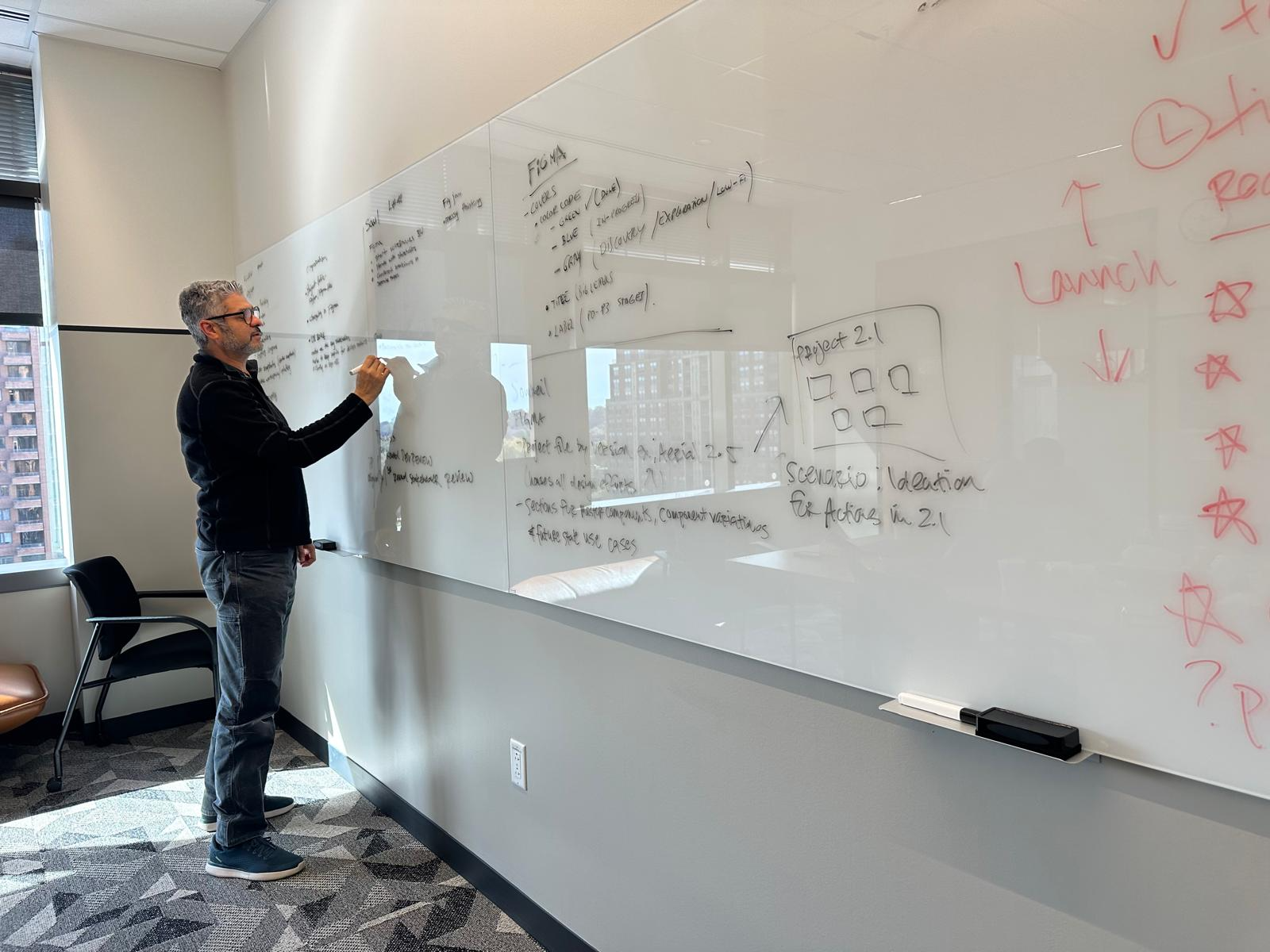
White boarding ideas and roadmap.
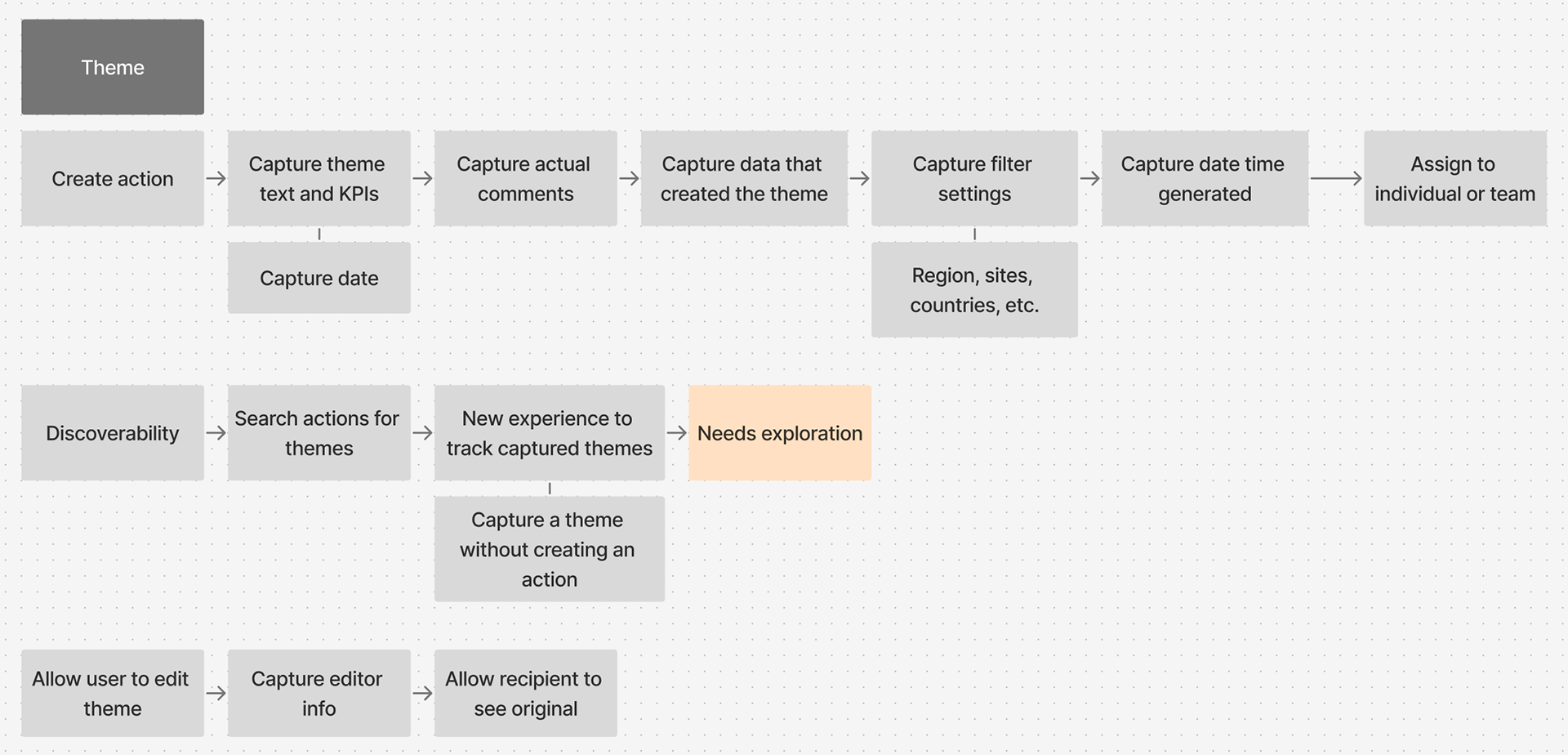
Ideating a mechanism to capture an AI generated theme and action it.
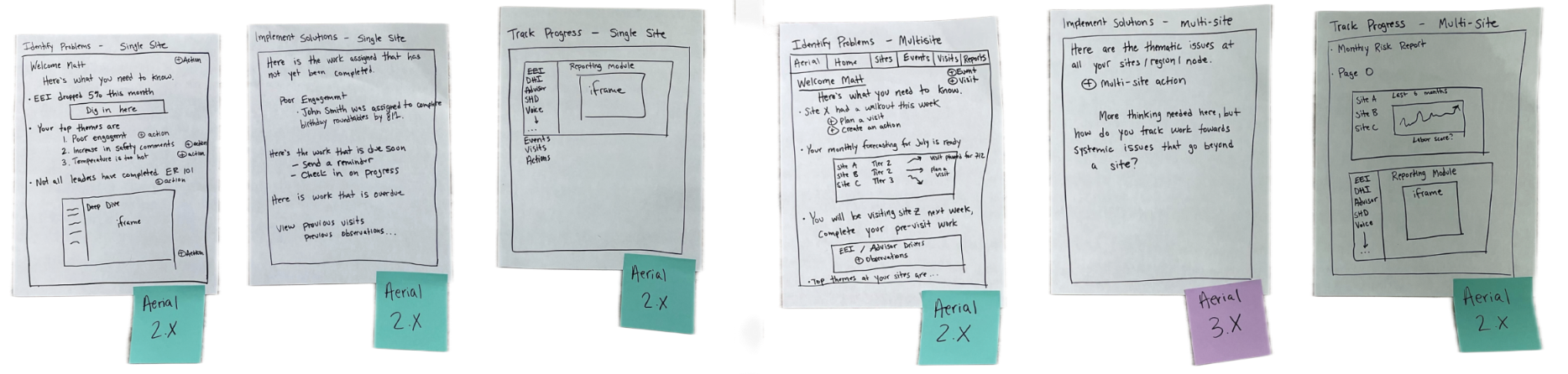
Photo sample of collaborative brainstorming session, includes features and version progression.
High fidelity designs
During the first high-fidelity design iteration, I focused on leveraging existing UX patterns and introducing new ones to solve for unique challenges using existing design elements.
Diving deep designs
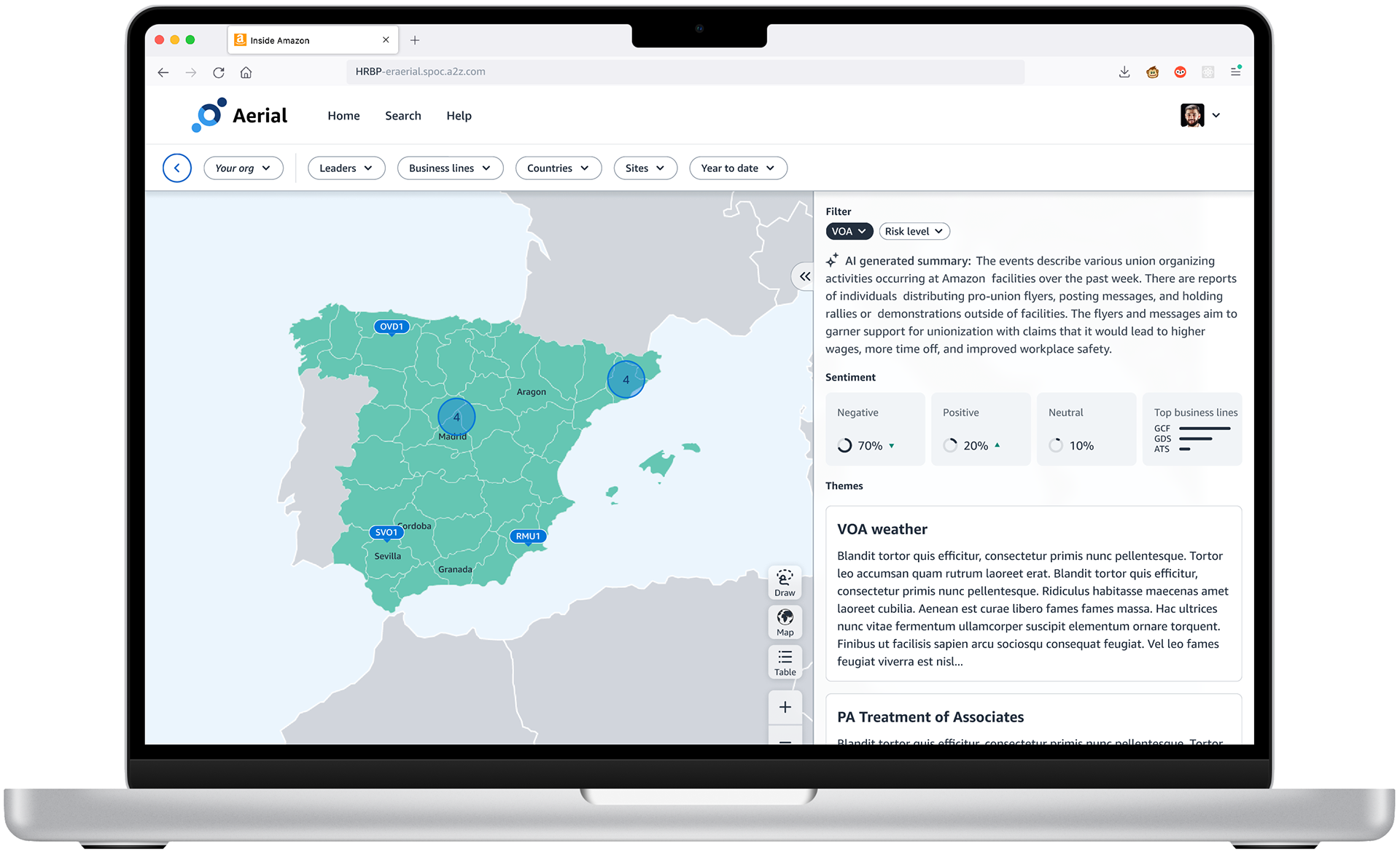
The landing page shows a comprehensive summary of lowlights and highlights. The filters on top can be used to focus on specific areas and regenerate a new summary.
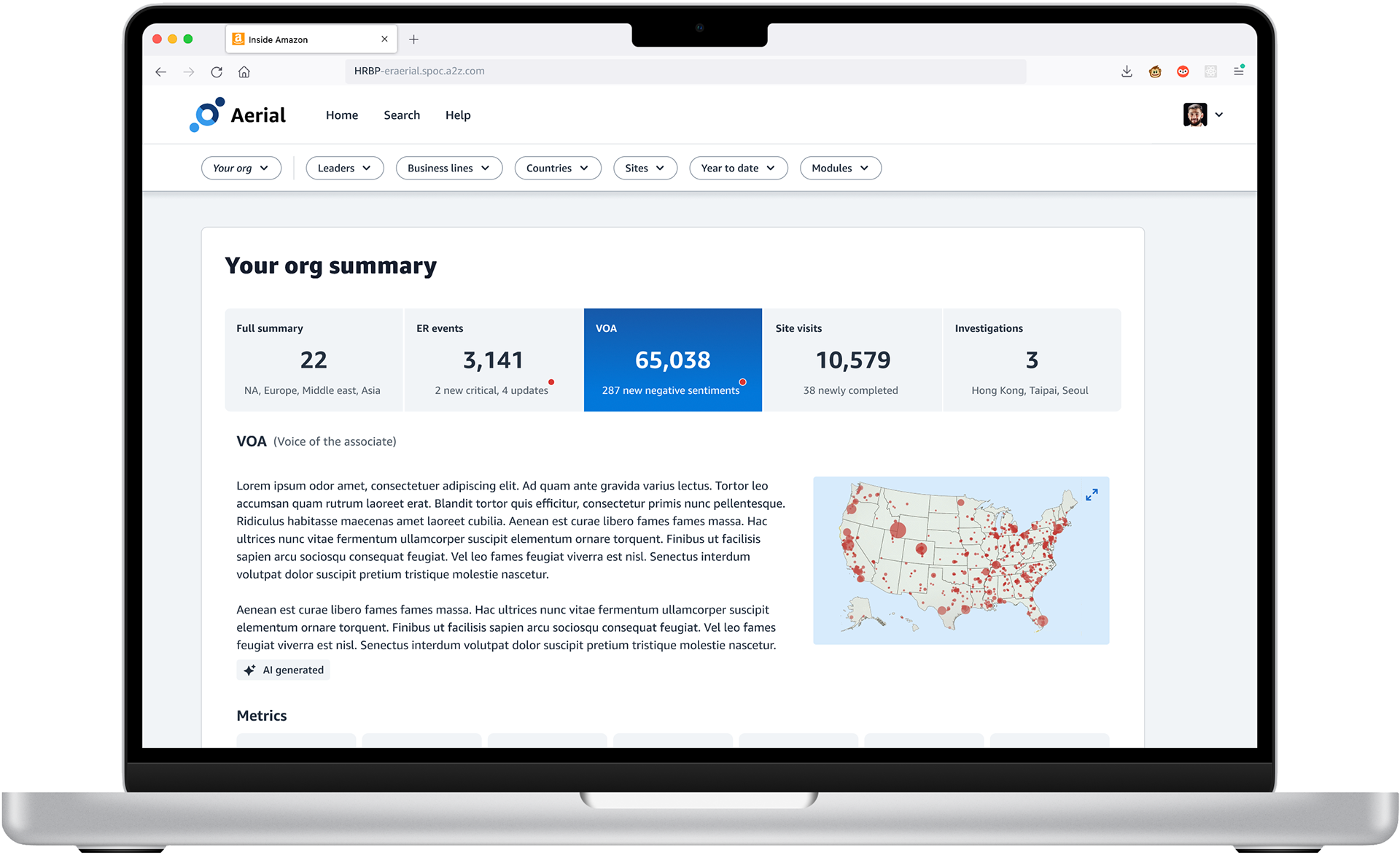
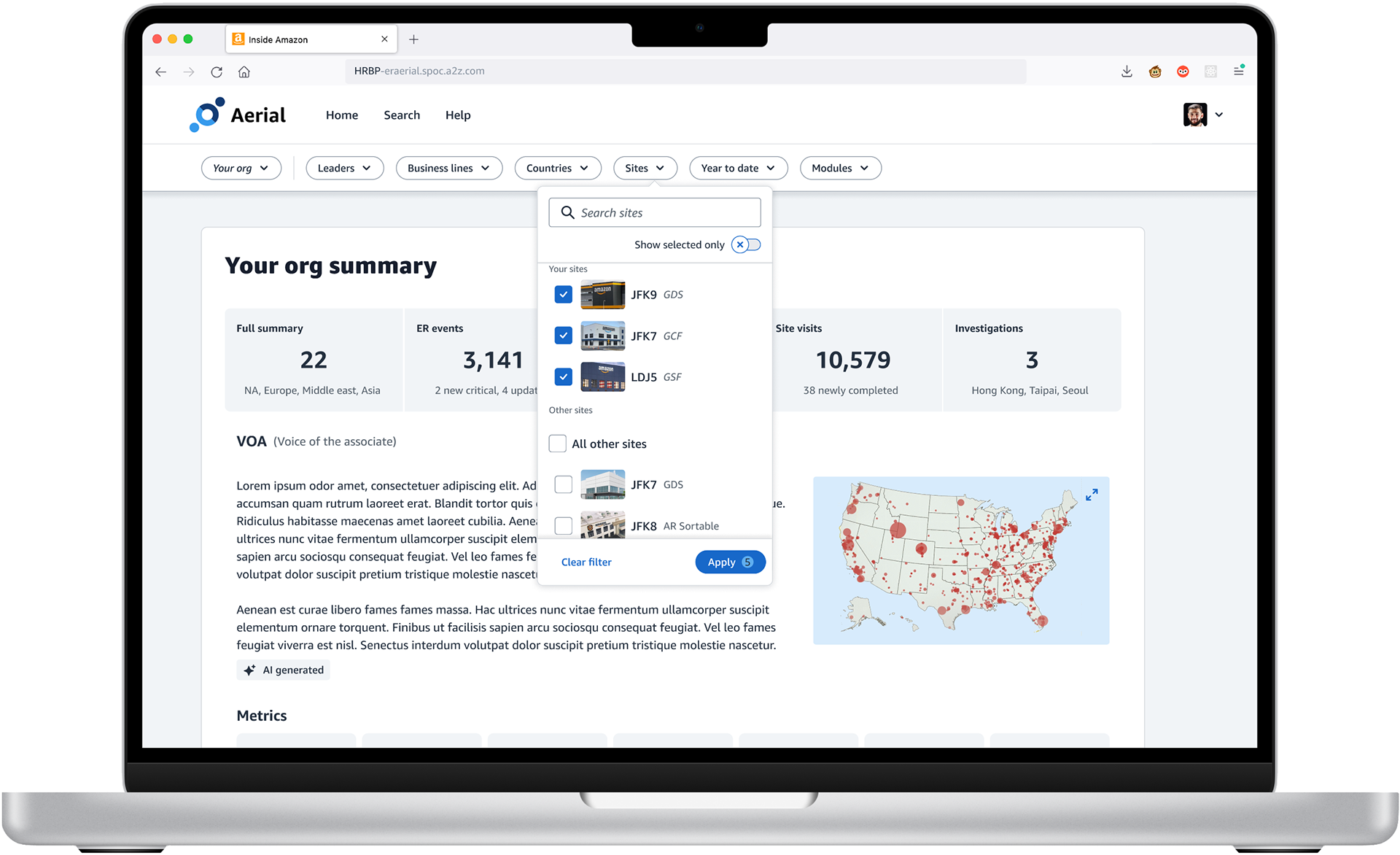
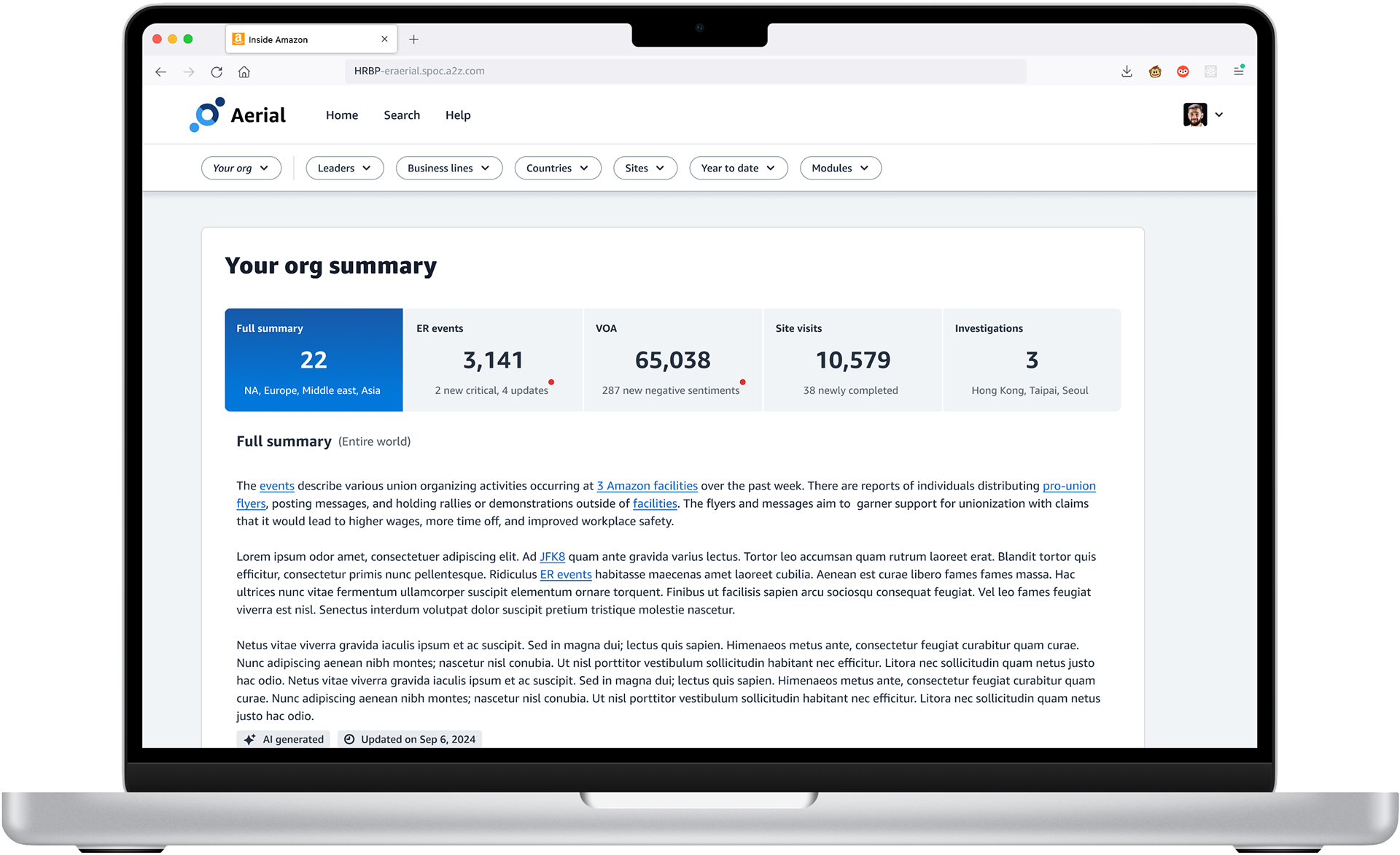
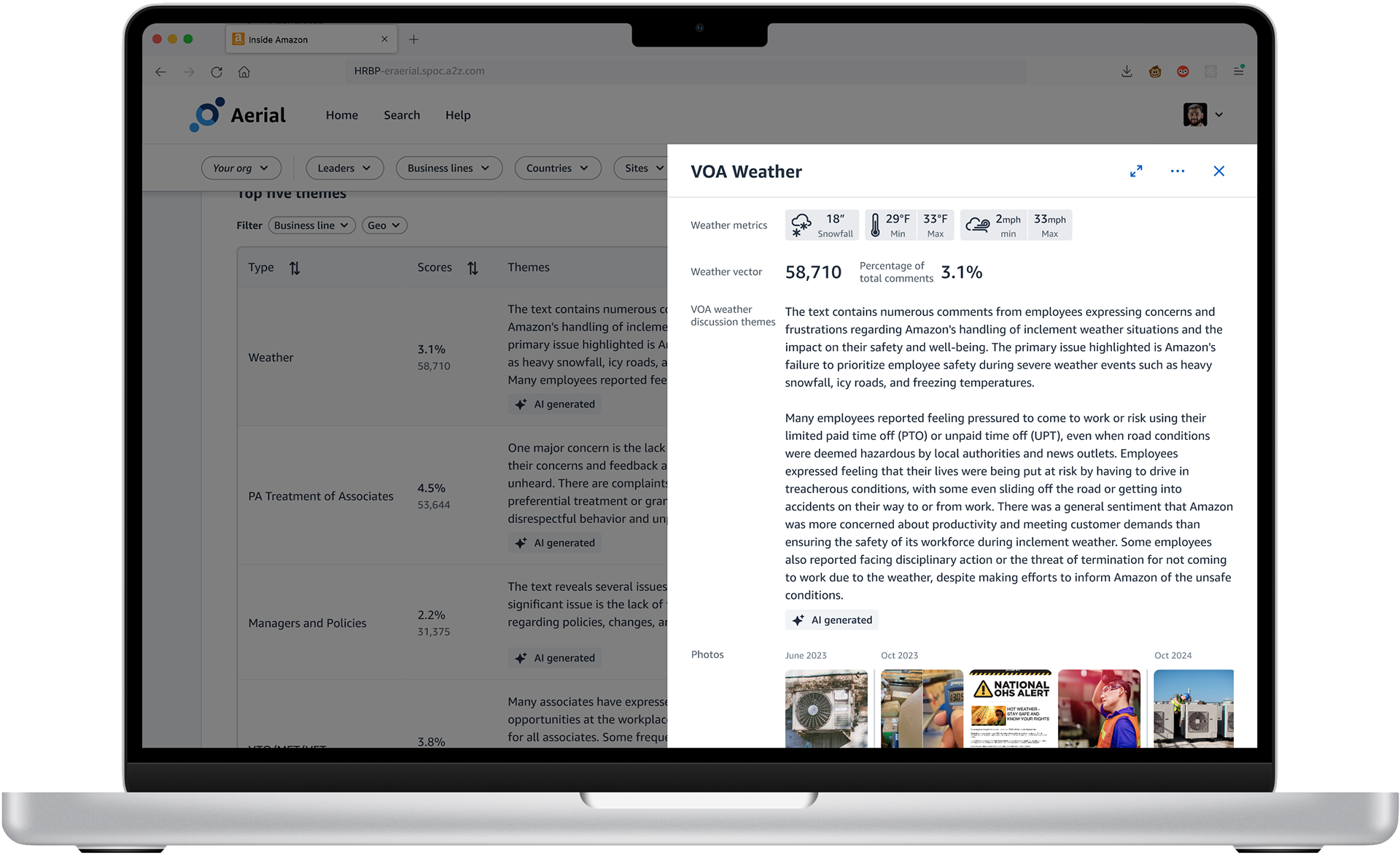
Landing page for a director, showing AI generated summaries and example of filters updating summaries.
Final designs
The final high-fidelity design phase culminated in a streamlined solution validated through comprehensive user testing, stakeholder review, and engineering feasibility assessments. Final deliverables included fully interactive desktop and mobile prototypes, with the mobile version accessible for real-device testing through the Figma app.
Interacting with the Figma prototype - director's persona.
Impact
Results & Impact
The platform delivered measurable business impact through improved user efficiency and adoption rates. Within six months of launch, usage data showed an 86% decline in traditional dashboard engagement as users transitioned to the new solution. Qualitative feedback highlighted significant time savings and improved workflow experiences, with users consistently reporting enhanced productivity. The rapid user migration and sustained positive reception demonstrate successful problem-solving and effective design execution.